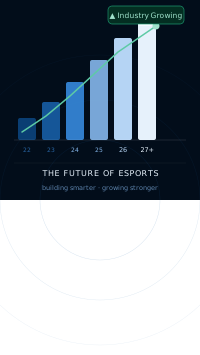
Esports is bigger than ever.
Viewership is up, cultural acceptance is growing, and the global footprint keeps expanding.
But behind the highlight reels and packed arenas, most esports organizations are quietly losing money — and that problem isn’t going away on its own.
The Salary Bubble Nobody Wants to Talk About
When esports exploded in popularity, teams went on spending sprees.
Big-name signings, guaranteed contracts, massive buyouts.
The logic made sense at the time — win with stars, grow the brand.
But results didn’t follow the investment. Players underperformed, rosters were reshuffled, and the financial hangover is still being felt across the industry today.
Technology Is Changing the Game — But Not Equally
AI coaching tools and advanced data analytics are becoming part of the competitive toolkit.
Teams that can afford them gain a real edge in strategy, performance analysis, and identifying opponent weaknesses.
The problem is that not every org has the budget to access these tools, and that’s widening the gap between well-funded organizations and everyone else.
Regulation Is Reshaping the Business Side
Governments are stepping in — particularly around digital betting and match-fixing prevention.
Regulation brings legitimacy, but it’s also forcing teams to rethink certain sponsorship categories that were previously reliable revenue sources.
It’s a necessary growing pain, but a pain nonetheless.
The Real Path Forward
The esports organizations that survive the next decade won’t just be the ones with the best players.
They’ll be the ones that build smarter — diversifying revenue streams, spending responsibly, compensating fairly, and prioritizing long-term stability over short-term hype.
The era of chasing trophies and hoping the money follows is over.
The future belongs to those who learn to run esports like a real business.